The first beagle in deep space. Zero-gravity indicator for Artemis I, longtime friend of NASA since the days of Apollo 10.
Snoopy has worn more NASA patches than most astronauts. He flew as the Zero-Gravity Indicator aboard Orion, floating free the moment the spacecraft slipped Earth's grip and signaled the start of the Artemis generation.
On November 16, 2022, the Space Launch System roared off Pad 39B. Strapped inside the Orion crew module — with no humans onboard, but plenty of spirit — sat a small plush figure in a miniature replica of the pumpkin-orange Orion Crew Survival System suit.
Snoopy's relationship with spaceflight reaches back to Apollo 10, when astronauts named the lunar module after the beagle and the command module after his pilot, Charlie Brown. Since then the Silver Snoopy Award has been given to thousands of engineers, technicians and flight crew for outstanding contributions to human spaceflight safety.
On Artemis I he did it again: the first moment of weightlessness, Snoopy drifted up, camera catching every second, reminding millions of viewers that the cosmos can still be met with a smile.
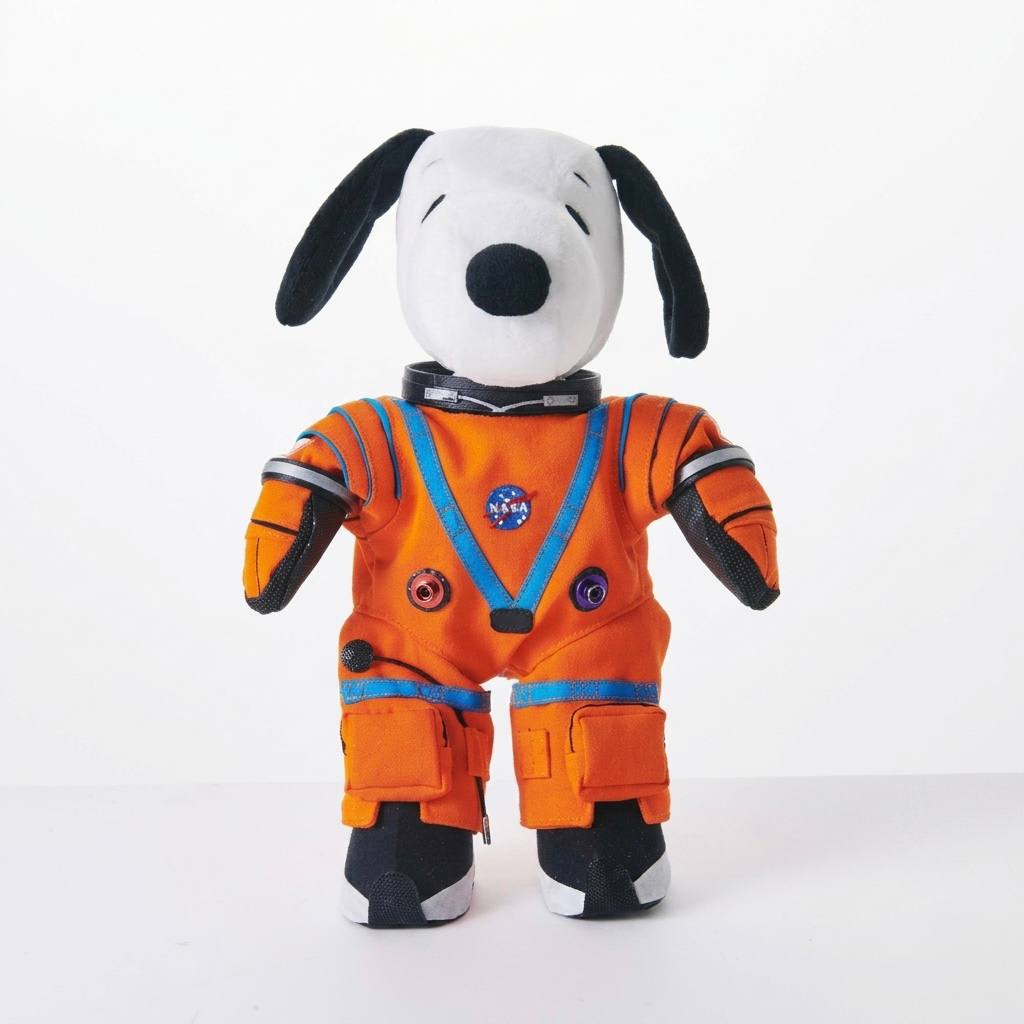
"He's been a part of the NASA family for more than fifty years — it's only fitting he comes along for the ride." — Artemis I Mission Management Team
HELMET COLLAR · ROTATING SEAL
NASA MEATBALL PATCH
CARGO POCKETS · TOOL TETHER
High-visibility outer layer inspired by the Launch Entry Suit. The same shade worn by the Artemis II crew — easy to spot in the open ocean after splashdown.
Reflective trim across the torso, routing pressure channels on the real OCSS. On Snoopy they trace the same path — form following mission heritage.
Purple and pink fittings for oxygen and communications on the flight hardware — kept as decorative callouts that make the replica feel alive.
Low-center-of-gravity feet keep him upright on console — until launch, when every ounce begins to float.
Follow the transmissions. Share the patches. Keep the beagle in orbit.